
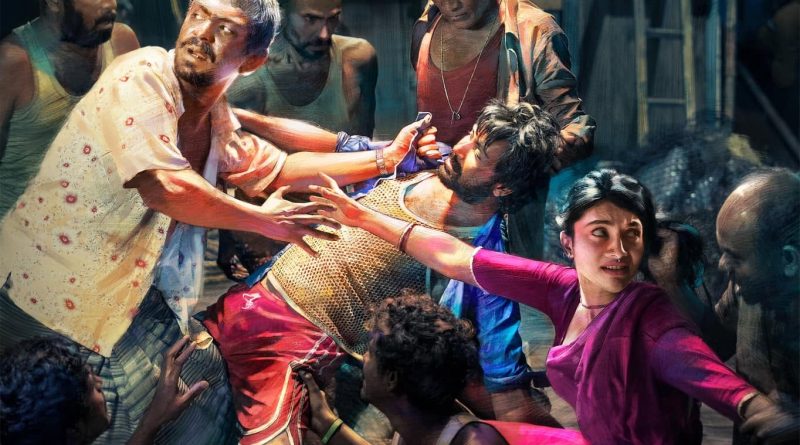
How ‘Hawa’ Put Bangladeshi Cinema on the Global Map
For most of its history, Bangladeshi cinema has struggled to reach audiences — or juries — beyond South Asia. Hawa (2022) changed that calculus almost overnight. Directed by Mejbaur Rahman Sumon in his feature debut, the mystery-drama follows the crew of a fishing trawler adrift at sea, growing increasingly consumed by superstition after a mysterious woman is discovered aboard.
The film’s slow-burn tension and striking cinematography — much of it shot on open water with a small, contained cast led by Chanchal Chowdhury as the trawler’s captain, Chan Majhi — turned it into one of the highest-grossing Bangladeshi films in years domestically. But its bigger significance came internationally: Hawa was selected as Bangladesh’s official submission for Best International Feature Film at the 95th Academy Awards, and was separately shortlisted for the 80th Golden Globe Awards, a level of recognition few Bangladeshi productions have reached.
The film did not ultimately secure an Oscar nomination, but the submission itself marked a shift in how Bangladeshi cinema positions itself on the world stage. Where earlier festival breakthroughs — including Nasiruddin Yousuff’s Guerrilla a decade earlier — were mostly celebrated domestically, Hawa‘s campaign was built explicitly around international distribution and awards strategy, signalling a more outward-looking ambition among the country’s independent filmmakers.
That ambition has continued past Hawa itself. Bangladeshi productions have increasingly found their way onto festival slates and streaming platforms outside South Asia, driven partly by the same generation of directors and actors who built their reputations on the film — a group now treated, at home and increasingly abroad, as the industry’s most bankable export.