
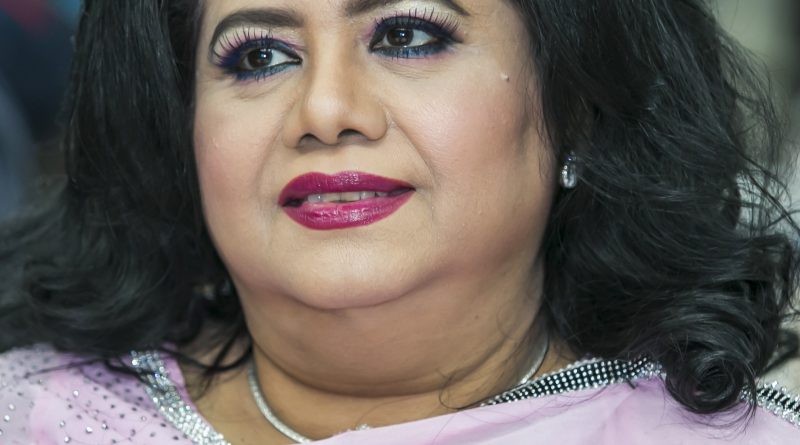
Runa Laila: The Voice That Shaped South Asian Music for Five Decades
Runa Laila’s musical career now stretches back roughly six decades, across three countries and at least 18 languages — a span few living South Asian singers can claim. Born on 17 November 1952 in Sylhet to Syed Mohammed Imdad Ali and musician Amina Laila, she trained under Ustad Abdul Kader Peyarang and Ustad Habibuddin Ahmed alongside her elder sister, Dina Laila, before turning professional in the late 1960s.
Laila began her career in the Pakistani film industry, where her early style drew heavily on playback singer Ahmed Rushdi, with whom she recorded numerous duets. It was her rendition of the Sufi standard “Dama Dam Mast Qalandar” that carried her voice beyond film soundtracks and into the broader South Asian musical canon, a recording still cited as one of the defining versions of the song.
She relocated to Bangladesh with her family in 1974, and her career there has been extraordinarily prolific: more than 10,000 recorded songs in Bengali, Urdu, Hindi, Punjabi, and over a dozen other languages. Her contribution to Bangladeshi film music alone earned her the National Film Award for Best Female Playback Singer a record seven times, for songs in films including The Rain (1976), Jadur Banshi (1977), Accident (1989), and Ontore Ontore (1994) — and, later, the National Film Award for Best Music Composer for Ekti Cinemar Golpo (2018).
In 1977, Laila was awarded the Independence Award, Bangladesh’s highest civilian honour, and she has since received more than 300 awards from institutions around the world. She was also named a SAARC Goodwill Ambassador for HIV/AIDS, the first Bangladeshi to hold the post. More than half a century after her debut, Laila remains a fixture at the country’s major entertainment ceremonies, including the Meril Prothom Alo Awards, where newer generations of performers routinely cite her as a reference point for longevity in the industry.